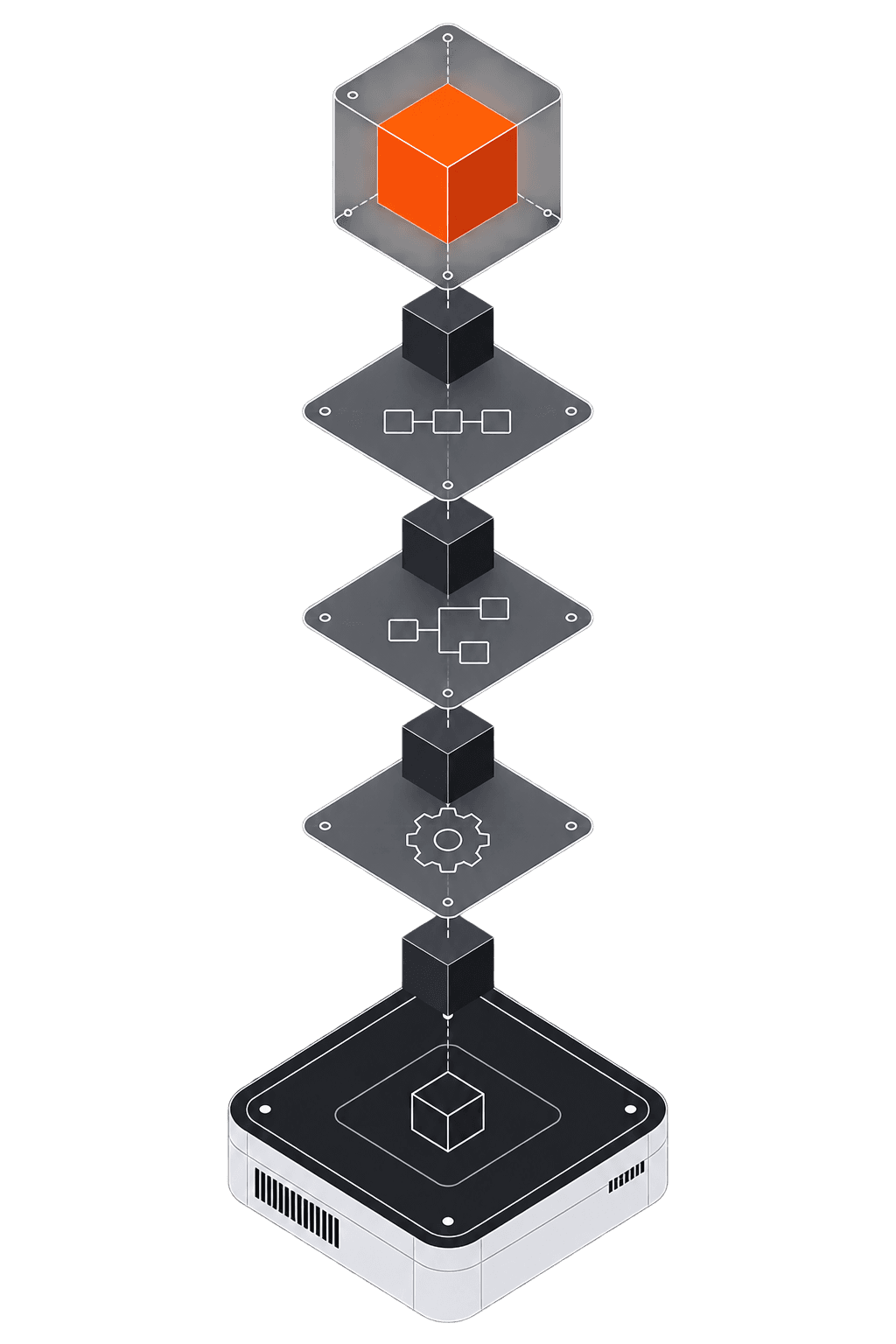
We work on the brand, product and operations of companies that are already growing.

Six services, and one delivery unit behind all of them: a pod put together for your project, with the roles the work needs. Design, build and content come from that same team, so your company briefs once and has one place to go with a question about any part of it. One lead runs it from the first call through delivery and answers for the result.

About Codence

We're the brand, product and operations partner for companies that are already growing. We take on the whole project, so your company briefs once and has one place to go with a question about any part of it. Design, build, content and whoever comes in for a specific piece all sit under the same lead.

A pod is three to eight roles, and which ones you get depends on what the work actually touches.

The composition comes out of the problem

Once the problem is mapped, the pod is set by role: which disciplines the work touches, which parts need depth, and which need somebody who works on that one thing all day. A software pod runs five to eight roles, a branding pod four to seven, an agent build three to five. Your company knows which roles are on the project and what each one is there to do.

A cadence you can plan against

The pod works to a fixed rhythm, so your company knows when work arrives and when a decision is needed from your side. One lead runs the project from the first call through delivery and answers to your company for what comes out of it. If somebody leaves the pod mid-project, the composition gets restored and the cadence holds.

What your side is asked for

Access to the systems and to whoever knows why they were built that way, decisions at the points where the decision is yours, and one person who can make them without taking each one to a committee. The pod runs its own planning and review, so your team gives input at agreed points and spends the rest of its week on its own work.

About Codence

We're the brand, product and operations partner for companies that are already growing. We take on the whole project, so your company briefs once and has one place to go with a question about any part of it. Design, build, content and whoever comes in for a specific piece all sit under the same lead.

A pod is three to eight roles, and which ones you get depends on what the work actually touches.

The composition comes out of the problem

Once the problem is mapped, the pod is set by role: which disciplines the work touches, which parts need depth, and which need somebody who works on that one thing all day. A software pod runs five to eight roles, a branding pod four to seven, an agent build three to five. Your company knows which roles are on the project and what each one is there to do.

A cadence you can plan against

The pod works to a fixed rhythm, so your company knows when work arrives and when a decision is needed from your side. One lead runs the project from the first call through delivery and answers to your company for what comes out of it. If somebody leaves the pod mid-project, the composition gets restored and the cadence holds.

What your side is asked for

Access to the systems and to whoever knows why they were built that way, decisions at the points where the decision is yours, and one person who can make them without taking each one to a committee. The pod runs its own planning and review, so your team gives input at agreed points and spends the rest of its week on its own work.

Our Services

What we work on

Helping businesses grow with clarity, confidence, and measurable results.

What we turn down

The work we don't take, and why

Four kinds of project we say no to on the first call. Each reason has to do with how the work would run, and none of them is about taste.

What we turn down

The work we don't take, and why

Four kinds of project we say no to on the first call. Each reason has to do with how the work would run, and none of them is about taste.

What we turn down

The work we don't take, and why

Four kinds of project we say no to on the first call. Each reason has to do with how the work would run, and none of them is about taste.

Branding

Branding

A rebrand with no commercial problem behind it

If nobody at the company can say what it's costing that the brand says less than the company is, there's nothing to design against and no way to tell afterward whether it worked. We ask for that sentence on the first call. When it isn't there, the honest answer is that the project isn't ready to be quoted.

Structure

Structure

Work aimed at the part that looks broken

When something that worked at one size stops working at the next, the visible symptom and the cause usually sit in different places. We work against what the mapping turns up, so a project that has to stay pointed at the symptom is one we turn down.

Composition

Composition

A named individual guaranteed for the whole project

The work is structured as a unit with a defined composition, so the project survives somebody leaving: the composition gets restored and the cadence holds. A guarantee on one specific person is the one thing that structure can't carry.

Approval

Approval

Work nobody on your side owns

A project needs one person at your company who can make a call without carrying each one through three approvals. When that person is missing, the work stalls in places nobody planned for and the pod spends its cadence waiting on answers it has no way to chase. We ask who that person is on the first call.

The Pod

How a project runs with a Pod

How a project runs with a Pod

The same three steps on every project, whatever the service. Nothing starts before the first one is signed.

The same three steps on every project, whatever the service. Nothing starts before the first one is signed.

01

Scope

02

03

1/3

Where it starts

Mapping

We go through the problem with the people who have it.

What fails, since when, what's already been tried, which systems are in play and who knows why they were built that way. That work produces the map the project runs against, and it's also what tells us which roles the pod needs.

What the mapping covers

  • The systems in play, and what each one is holding up

  • Where work is still done by hand, and by whom

  • What's been tried before, and where it stopped holding

  • Who at your company decides on each part

  • Which roles the pod needs, and what each one is there for

A smiling woman wearing glasses and a denim jacket working on a silver laptop while sitting on a comfortable black leather seat.

01

Scope

02

03

Where it starts

Mapping

We go through the problem with the people who have it.

What fails, since when, what's already been tried, which systems are in play and who knows why they were built that way. That work produces the map the project runs against, and it's also what tells us which roles the pod needs.

What the mapping covers

  • The systems in play, and what each one is holding up

  • Where work is still done by hand, and by whom

  • What's been tried before, and where it stopped holding

  • Who at your company decides on each part

  • Which roles the pod needs, and what each one is there for

A smiling woman wearing glasses and a denim jacket working on a silver laptop while sitting on a comfortable black leather seat.

Who We Work With

Who this works for

Who this works for

This is a fit

If most of this describes your company, there's something concrete to talk about on the first call.

⠉⠉

You already have traction: paying users, real revenue, or recent funding

⠉⠉

You can name what the problem is costing you

⠉⠉

You have someone who can decide without carrying it through a committee

⠉⠉

You want one partner accountable for the result

⠉⠉

You're growing and something structural stopped keeping up

This isn't

If your project is closer to this one, we'd rather say so on the first call than three weeks in.

You're validating an idea and want the cheapest version

You need it live in two weeks

You want the work split across separate vendors

You're comparing on price

You want extra hands on your own team's work

This isn't

If your project is closer to this one, we'd rather say so on the first call than three weeks in.

You're validating an idea and want the cheapest version

You need it live in two weeks

You want the work split across separate vendors

You're comparing on price

You want extra hands on your own team's work

FAQs

Questions we get before the first call

Twenty minutes on the problem, and what it would take to fix it.

If it's work we should take, you leave the call knowing which roles it needs and how we'd go at it. If it isn't, we say so there.

Who actually does the work?

A pod assembled for your project, set by role once the problem is mapped: a software pod runs five to eight roles, a branding pod four to seven, an agent build three to five. Which roles you get depends on what the work touches, so two projects in the same service rarely have the same pod. One lead runs it from the first call through delivery and answers to your company for the result.

How much of our team's time does this take?

What happens if someone leaves mid-project?

Can you work alongside our own team?

What if the project changes halfway through?

What happens when the project ends?

Can we start with something small?

FAQs

Questions we get before the first call

Twenty minutes on the problem, and what it would take to fix it.

If it's work we should take, you leave the call knowing which roles it needs and how we'd go at it. If it isn't, we say so there.

Who actually does the work?

A pod assembled for your project, set by role once the problem is mapped: a software pod runs five to eight roles, a branding pod four to seven, an agent build three to five. Which roles you get depends on what the work touches, so two projects in the same service rarely have the same pod. One lead runs it from the first call through delivery and answers to your company for the result.

How much of our team's time does this take?

What happens if someone leaves mid-project?

Can you work alongside our own team?

What if the project changes halfway through?

What happens when the project ends?

Can we start with something small?

If that sounds like your company, the next step is a call.

Twenty minutes on the problem, and whether it's work we should take. If it isn't, we'll say so there.

© 2026 Codence. All rights reserved.

If that sounds like your company, the next step is a call.

Twenty minutes on the problem, and whether it's work we should take. If it isn't, we'll say so there.

© 2026 Codence. All rights reserved.

If that sounds like your company, the next step is a call.

Twenty minutes on the problem, and whether it's work we should take. If it isn't, we'll say so there.

© 2026 Codence. All rights reserved.